Birding in the Everglades is one of the easiest and most rewarding wildlife experiences in Florida. You do not need to be an expert birder. You do not need to hike miles into the wilderness. And yes, you can absolutely enjoy it with limited mobility.
Everglades National Park is home to more than 350 bird species and is the largest subtropical wilderness in the United States. It is also one of the most accessible national parks we have visited. I use hiking poles due to MS, and I was still able to experience incredible close-up wildlife here.
If you are looking for the best birding spots in the Everglades, especially easy or wheelchair-accessible options, this guide will walk you through exactly where to go and what you can expect to see.
Disclosure: This post might contain affiliate links. If you buy through one of these links, it will not cost you anything extra, but we might get a small commission. Thank you for supporting us. To learn more, please read our full affiliate disclaimer page.
Quick Summary
Experience the best birding in the Everglades, even if you’re new to birdwatching or have limited mobility. From the Anhinga Trail to Mrazek and Paurotis Ponds, discover alligators, roseate spoonbills, herons, vultures, and more. Wheelchair-accessible trails, roadside ponds, and scenic boat tours make it easy to enjoy the park’s wildlife without extensive hiking. Tips, accessibility info, and practical advice included for every visitor.
Table of contents
- What are the Everglades?
- Anhinga Trail (Wheelchair Accessible and Perfect for Beginner Birding)
- Flamingo Visitor Center: Getting There & Land-Based Birding
- Flamingo Boat Tour: Birding on Florida Bay
- Mrazek Pond
- Paurotis Pond
- Conclusion: Birding in The Everglades
- Frequently Asked Questions: Everglades Birding
- Is birding in the Everglades suitable for beginners?
- Can I bird the Everglades with limited mobility or in a wheelchair?
- What birds are easiest to see in the Everglades?
- Will I see alligators or crocodiles while birding?
- Are there guided tours or boat trips for birding?
- When is the best time to visit for birding?
- Other UNESCO World Heritage Sites To Visit
- Birding Around The World
What are the Everglades?
Everglades National Park is the largest tropical wilderness in the United States and the third-largest national park in the contiguous U.S., after Death Valley National Park and Yellowstone National Park.
In 1976, UNESCO declared the Everglades and Dry Tortugas National Park a Biosphere Reserve. A few years later, in 1979, the Everglades earned full UNESCO World Heritage Site status. Just like Sian Ka’an Biosphere Reserve in Mexico.
The Everglades are not just “a swamp.” They are a slow-moving river of grass flowing from Lake Okeechobee down into Florida Bay. All of that creates one of the most unique ecosystems in North America.
It is:
- The most important breeding ground for tropical wading birds in North America
- Home to the largest mangrove ecosystem in the Western Hemisphere
- Habitat for Florida panthers, alligators, crocodiles, and manatees
- And a sanctuary for more than 350 bird species
Which is exactly why birders love it. Just don’t trip over a crocodile.
Anhinga Trail (Wheelchair Accessible and Perfect for Beginner Birding)
If you only have time for one easy birding stop in Everglades National Park, make it the Anhinga Trail.
The trail is just 0.8 miles (about 1.2 km) long, mostly flat, and largely built on boardwalks. It winds through sawgrass marsh and delivers wildlife almost immediately.
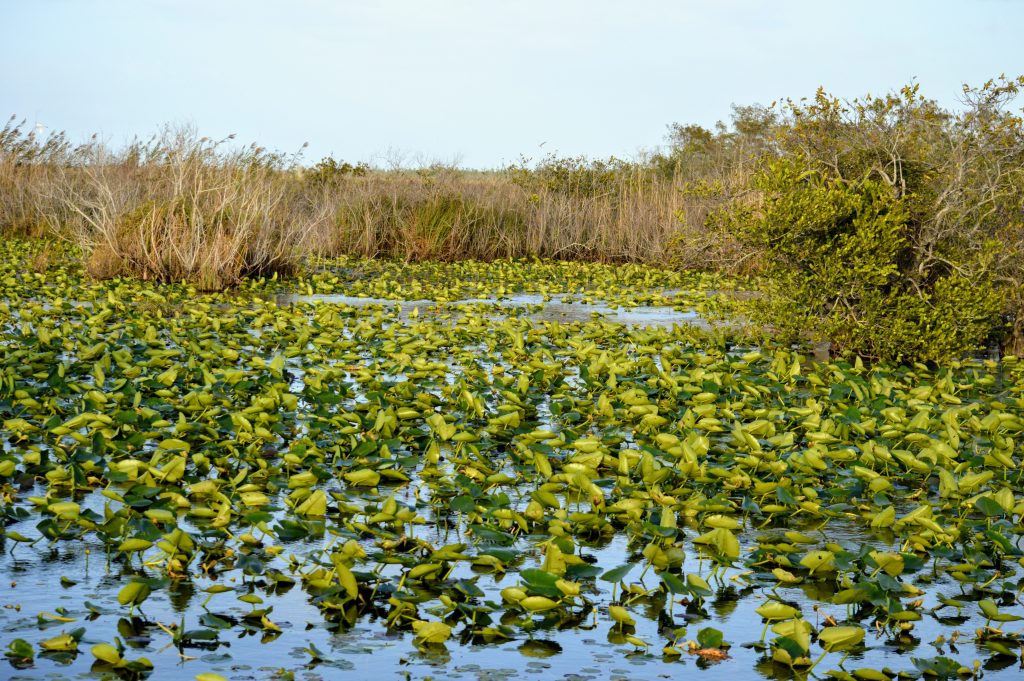
Located near the Royal Palm Visitor Center, about four miles from the Homestead entrance, this is one of the most accessible and productive birding spots in the Everglades.
How Accessible Is the Anhinga Trail?
This trail is wheelchair accessible and mostly boardwalk. The surface is stable and level, and you can see a tremendous amount without walking far.
The nearby Gumbo Limbo Trail is also accessible, which makes this area ideal for visitors with mobility limitations, families with strollers, or anyone who prefers easy walking.
I use hiking poles due to MS, and this trail was completely manageable.
Wildlife You Can See on Anhinga Trail
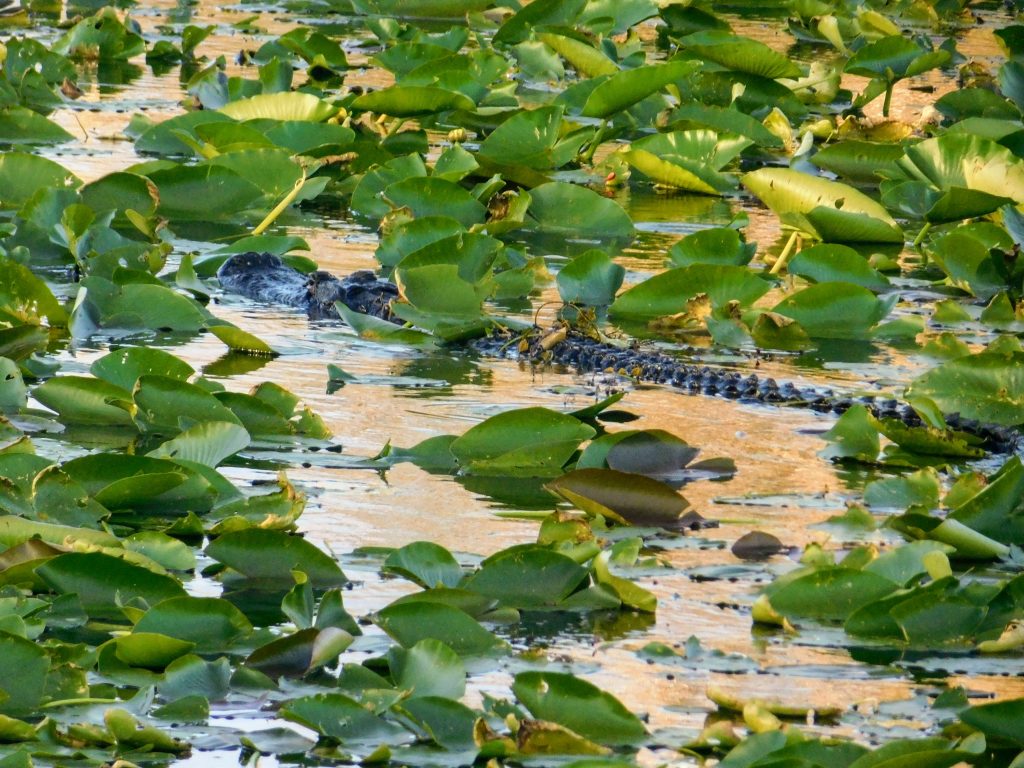
The first thing we saw was not a bird. It was an alligator. They lay beside the boardwalk, and we noticed them quickly. Of course, mostly because people were standing there and pointing…
Then the birding began. We saw:
Double-Crested Cormorants
After the excitement of our first alligator, two double-crested cormorants were perched on the railing. They totally ignored the people walking past—they just sat, relaxed, and posed.
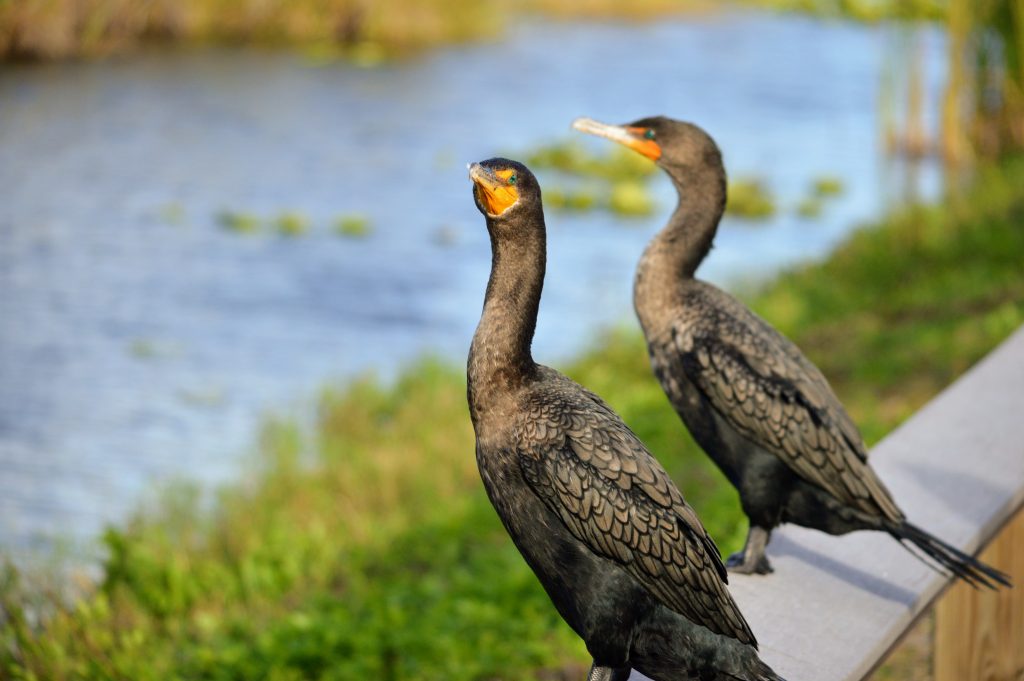
Cormorants are diving birds. Their diet is mostly fish, but they also eat small eels and even water snakes. Because they spend so much time underwater, it’s usually tricky to photograph them. “Oops, this is where the cormorant was half a second ago!” So this encounter was a rare convenience.
Anhingas
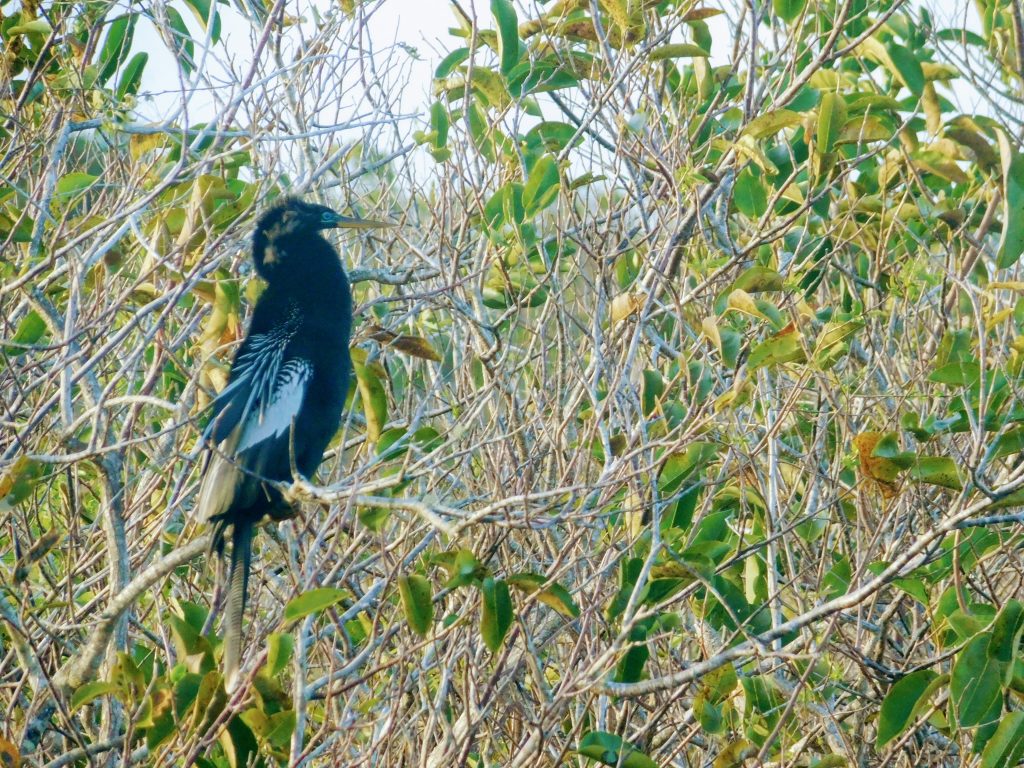
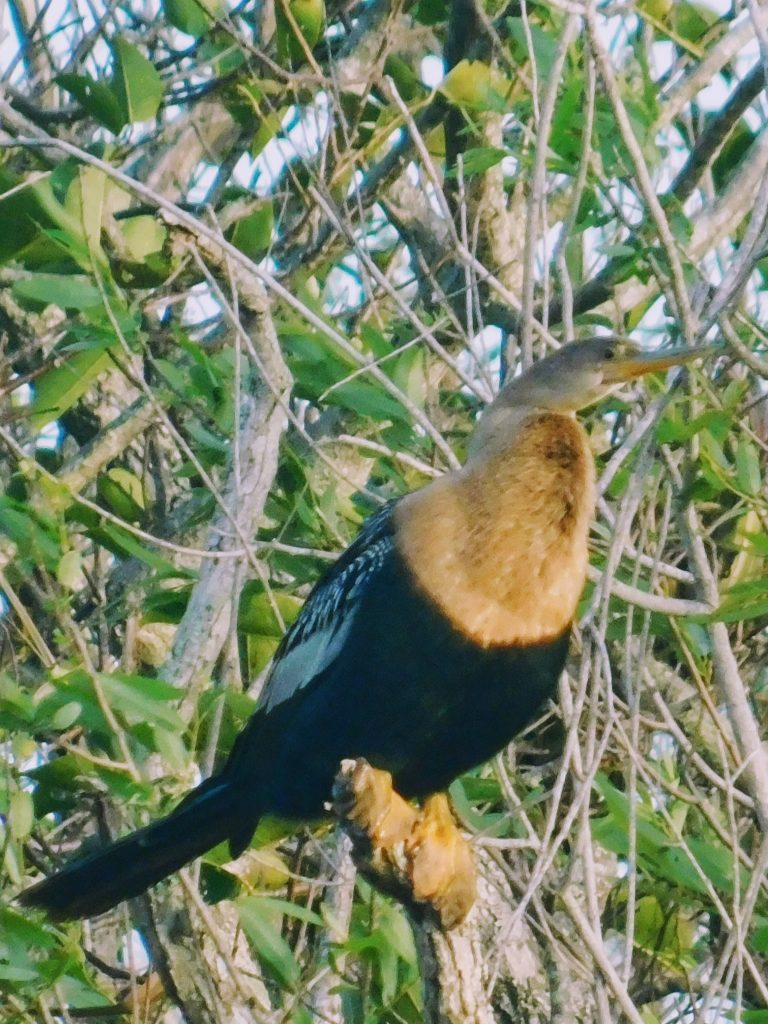
I have to admit—I had never heard of anhingas until we came to the trail named after them. These birds are similar to cormorants but with noticeably longer necks.
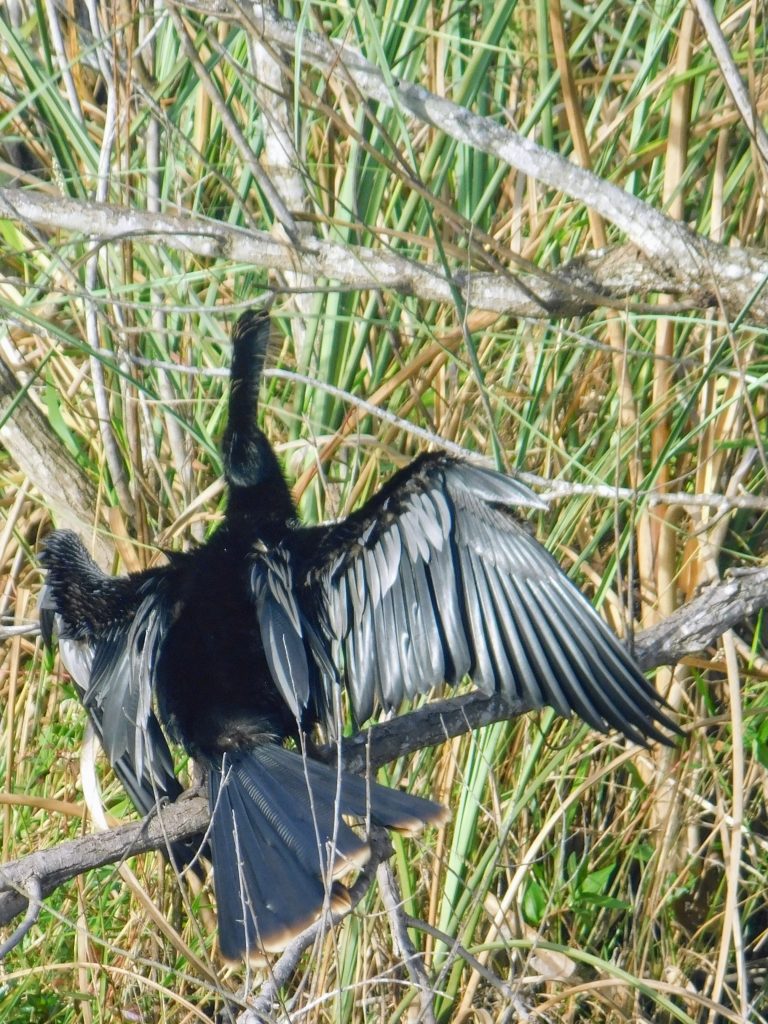
Anhingas are sometimes called “snake birds” because of their long, snakelike necks as they swim through the water. Like cormorants, they dry their wings on boardwalk perches or logs. We saw both males and a female, which is easy to distinguish because of clear color differences.
Purple Gallinules
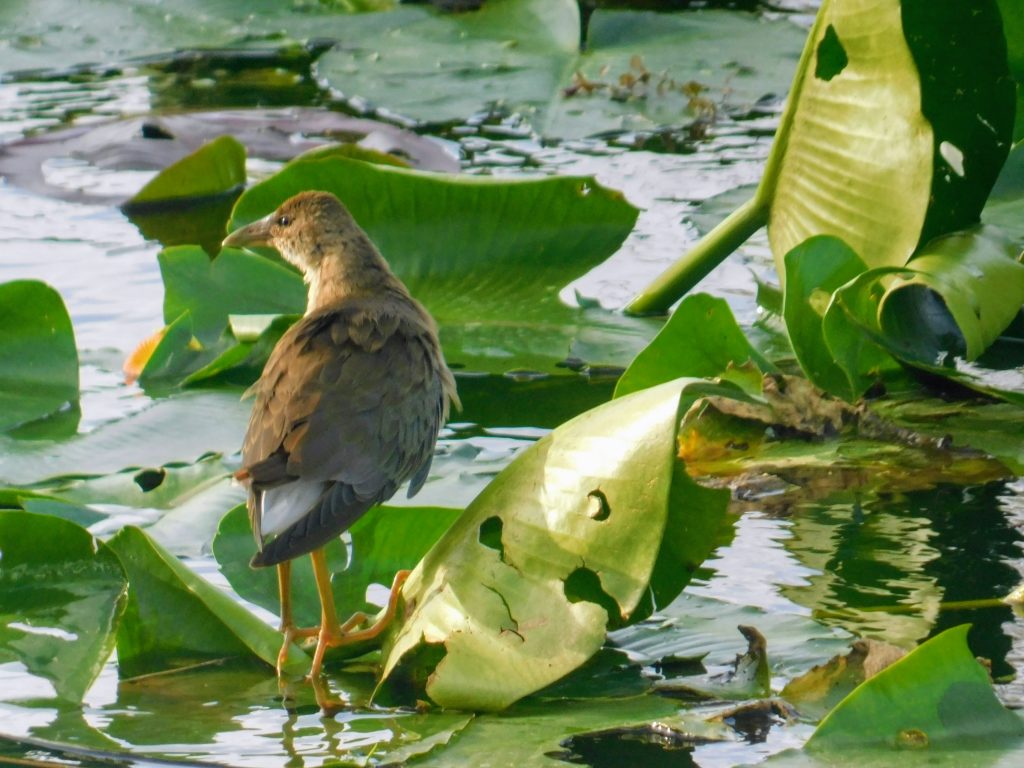
Growing up in the Netherlands, I saw plenty of American coots—black-and-white, kind of “boring.” Imagine my surprise when we discovered their groovy Everglades cousins, the purple gallinules. Vibrant colors, enormous feet, and a bold attitude make them practically impossible to ignore.
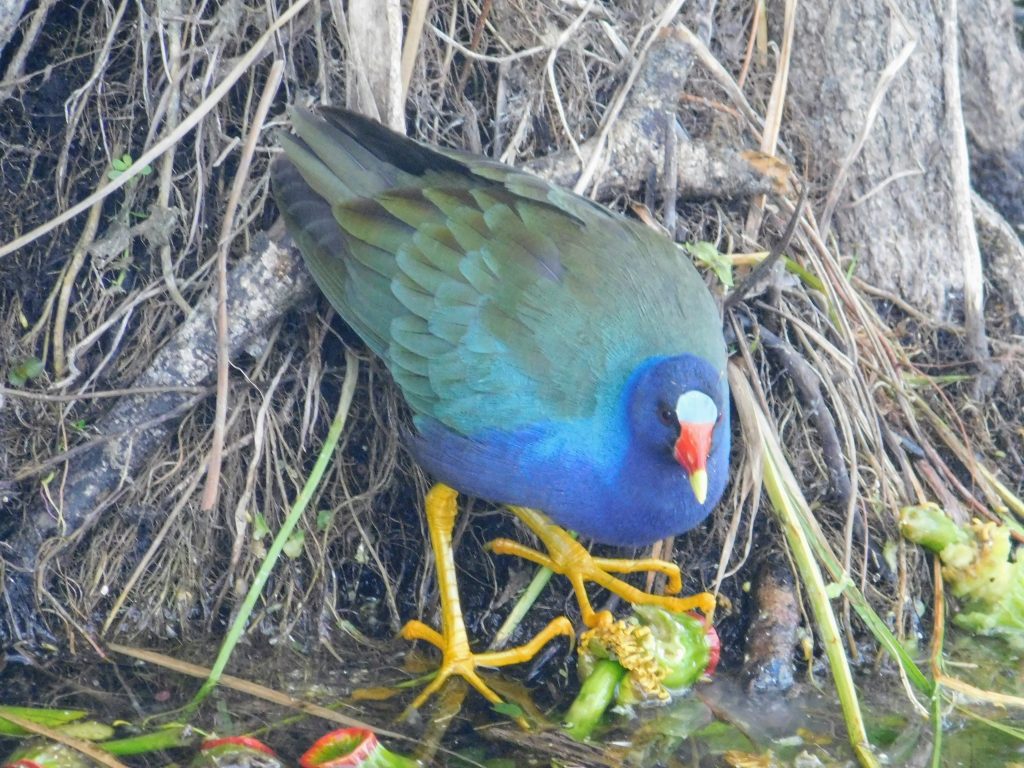
We saw both an adult and a juvenile. Watching them walk across lily pads in search of food is fascinating—they balance on water plants with more confidence than I have on solid ground!
Why Anhinga Trail Is One of the Best Birding Spots in the Everglades
- Short distance
- Flat terrain
- Boardwalk construction
- High concentration of birds
- Frequent alligator sightings
It is beginner-friendly, mobility-friendly, and photographer-friendly.
Flamingo Visitor Center: Getting There & Land-Based Birding
The next day, we had a full day of birding planned in the Everglades, and Flamingo was at the top of our list.
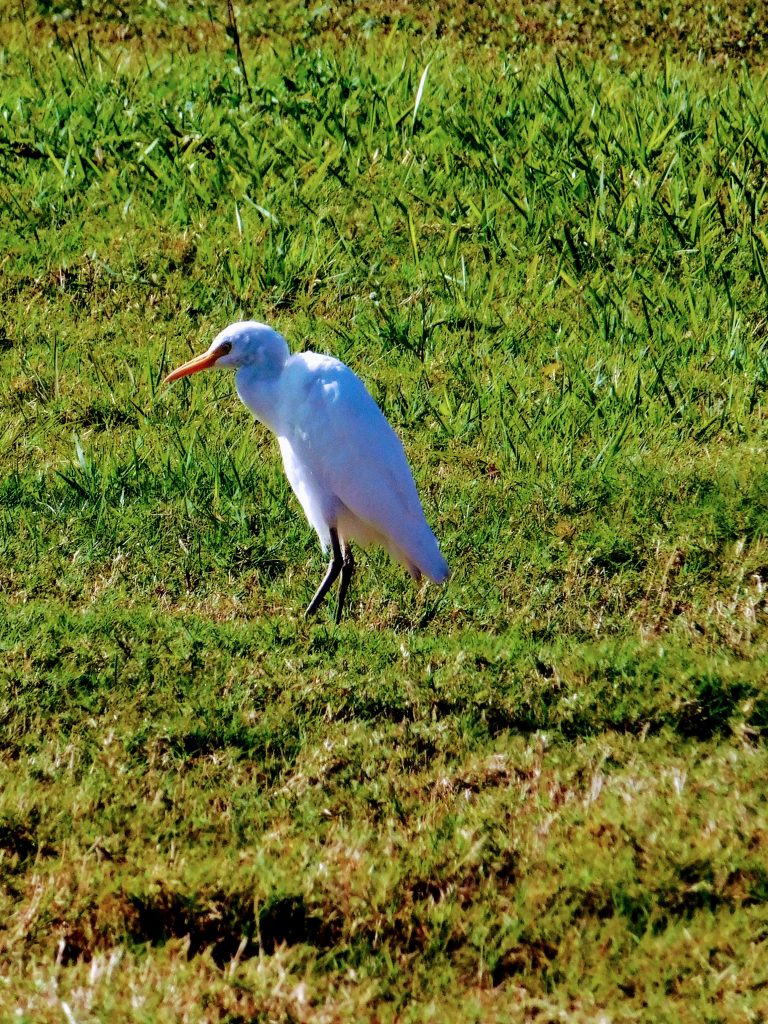
The drive to the Flamingo Visitor Center is 38 miles from the Homestead entrance, past the Ernest F. Coe Visitor Center. It is a long but beautiful drive through marshland, and we saw egrets, herons, and vultures along the road before we even arrived.
This is as far south as you can drive in the park.
The visitor center itself is wheelchair accessible via a steep ramp. Unfortunately, it was closed when we visited due to hurricane da, so I can’t speak to the interior. The marina, however, was open and very much alive.
Eco Pond and the Birds Around Flamingo
Before even setting foot near the marina, the birding started.
While driving around to get our bearings, we suddenly noticed large birds soaring overhead in formation. At first, they reminded us of snow geese, but something didn’t quite add up.
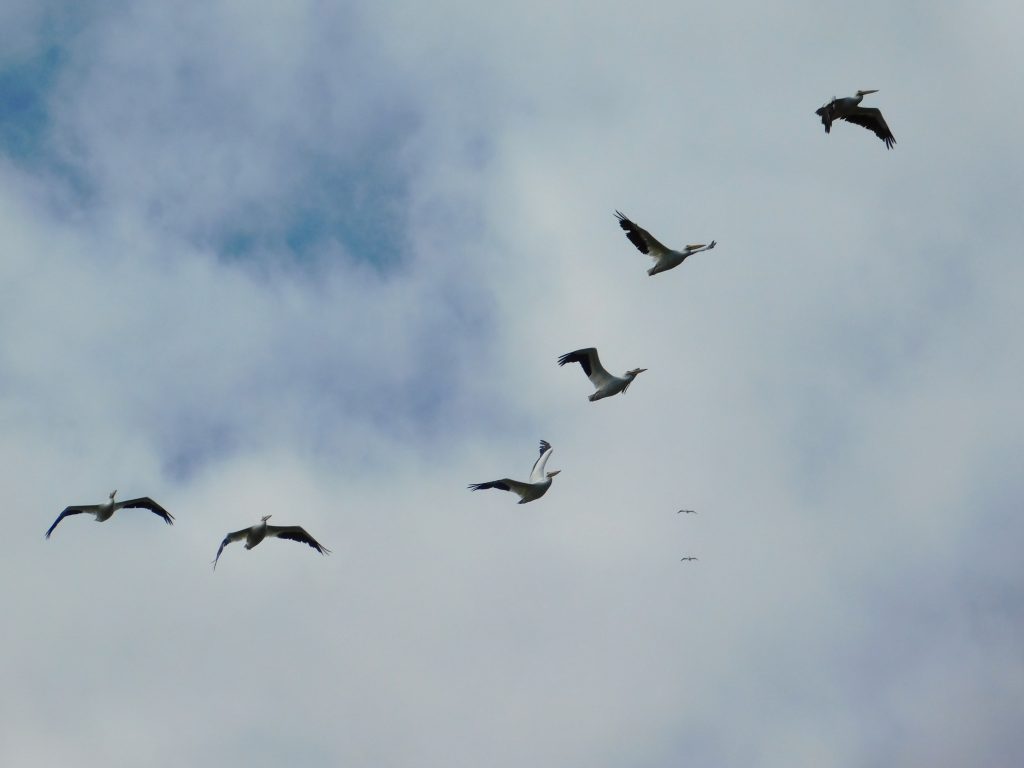
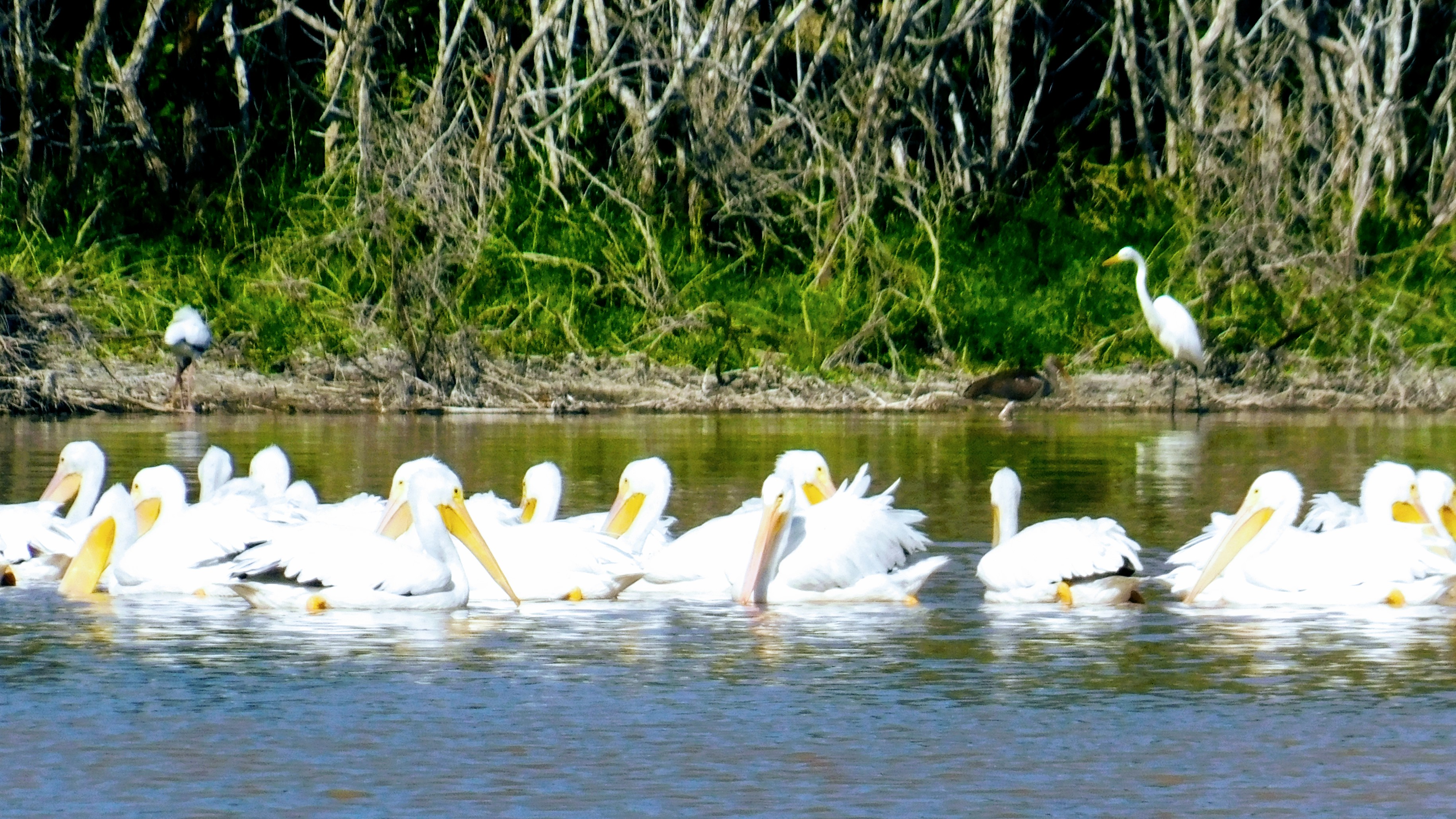
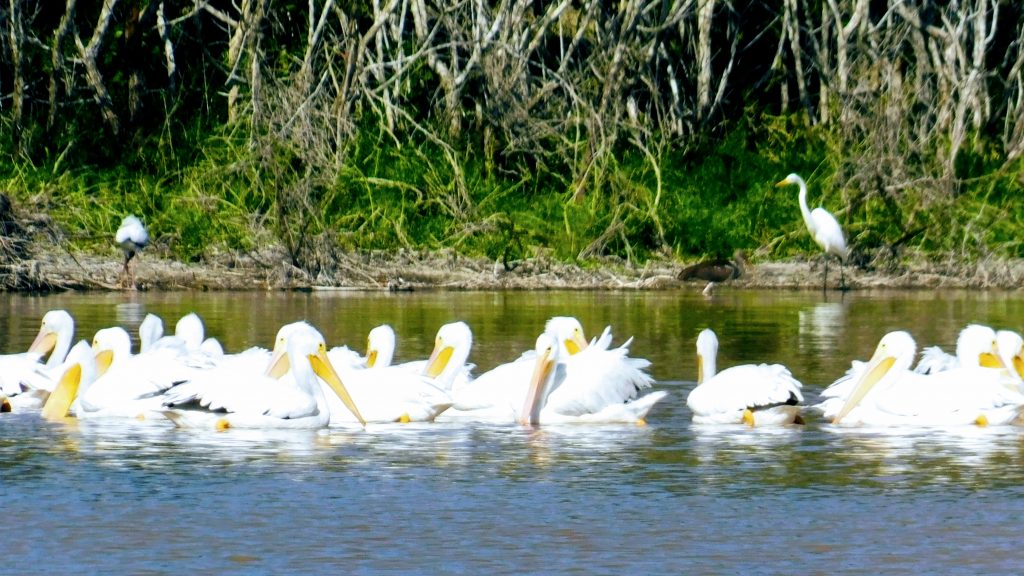
After some unintentional back-and-forth driving, we found their landing spot at Eco Pond.They were American white pelicans. Hundreds of them.
Once they landed, there was no doubt. They are enormous, elegant, and impossible to miss.
Great Egrets
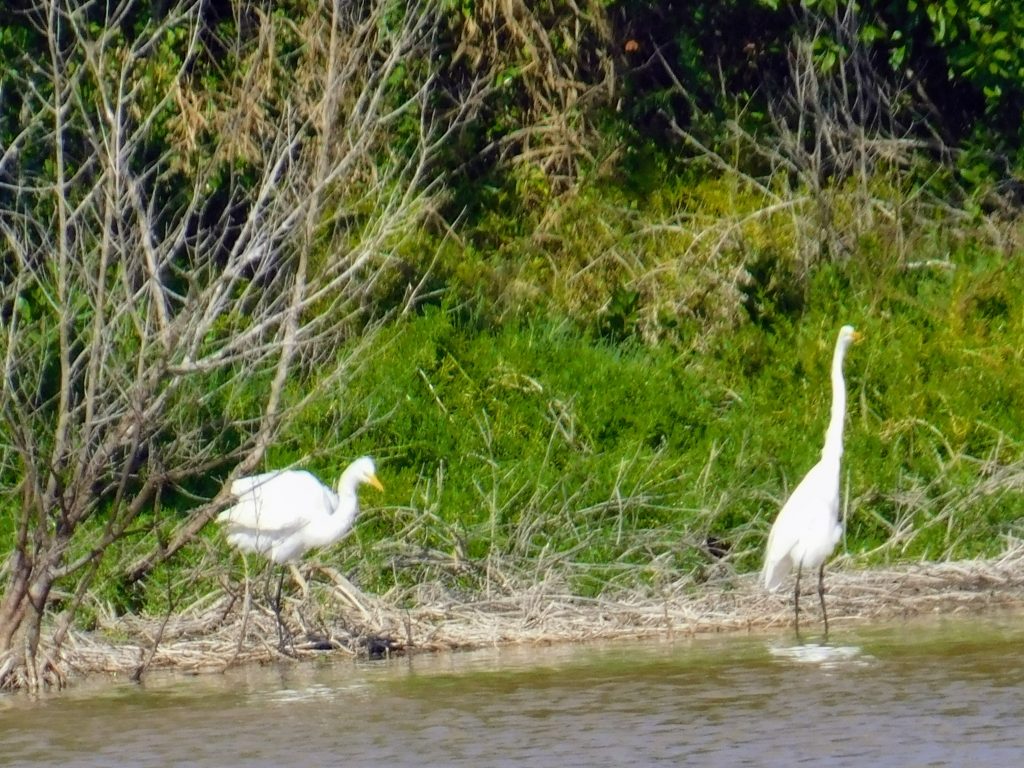
We also saw plenty of great egrets, including several right near the pelicans.
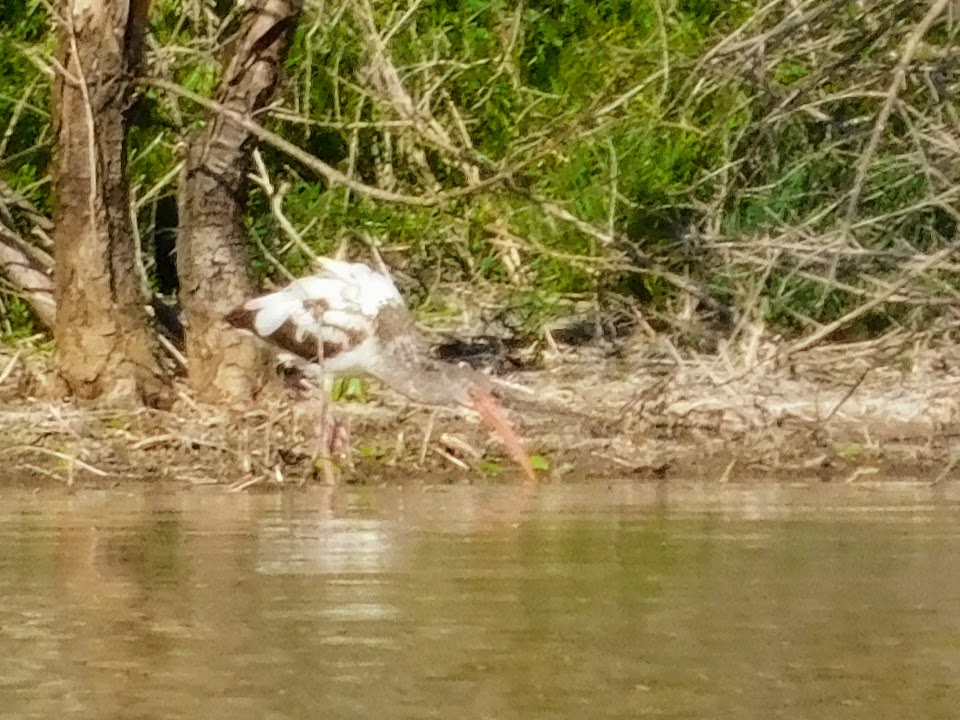
Wood Stork
While still processing the sheer number of pelicans, we noticed another large wading bird along the shore. I couldn’t identify it at the time, but later, back home, the photo confirmed it was a wood stork. A new species for me, which made an already excellent stop even better.
Beginner birding tip (and honestly, useful for everyone): the Merlin app is incredibly helpful for identifying birds from photos or sound recordings.
Marina Wildlife at Flamingo
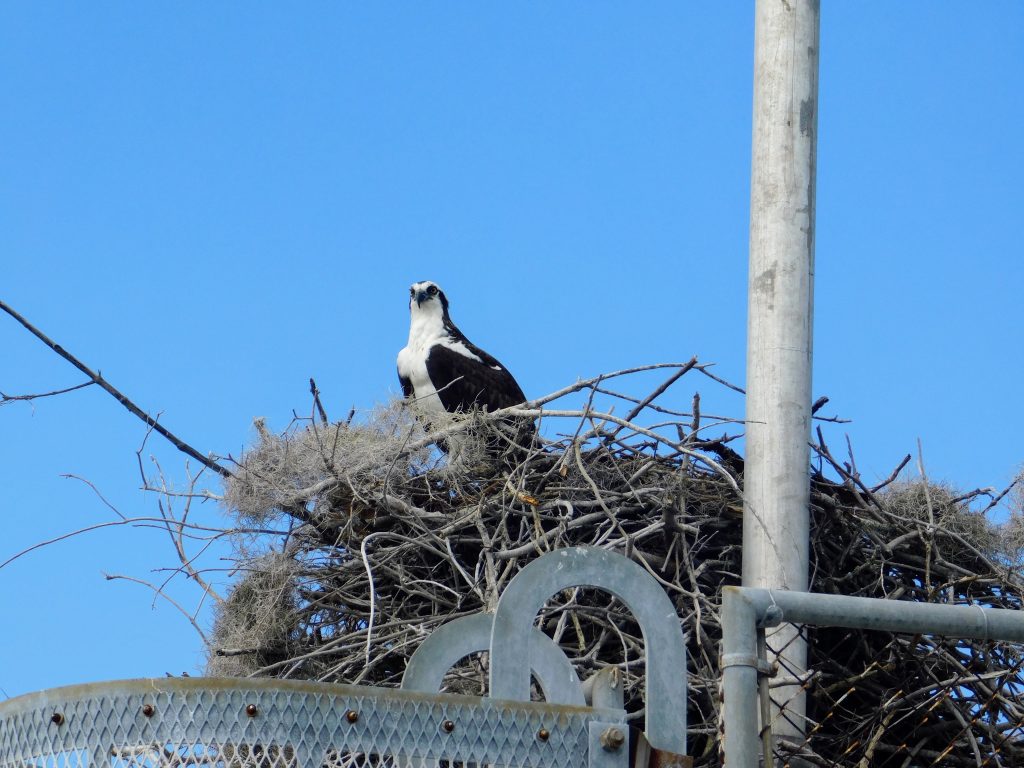
When we moved on to the marina area, we almost immediately spotted an osprey nest right next to the building. Seeing a nesting raptor this close makes birding feel easy.
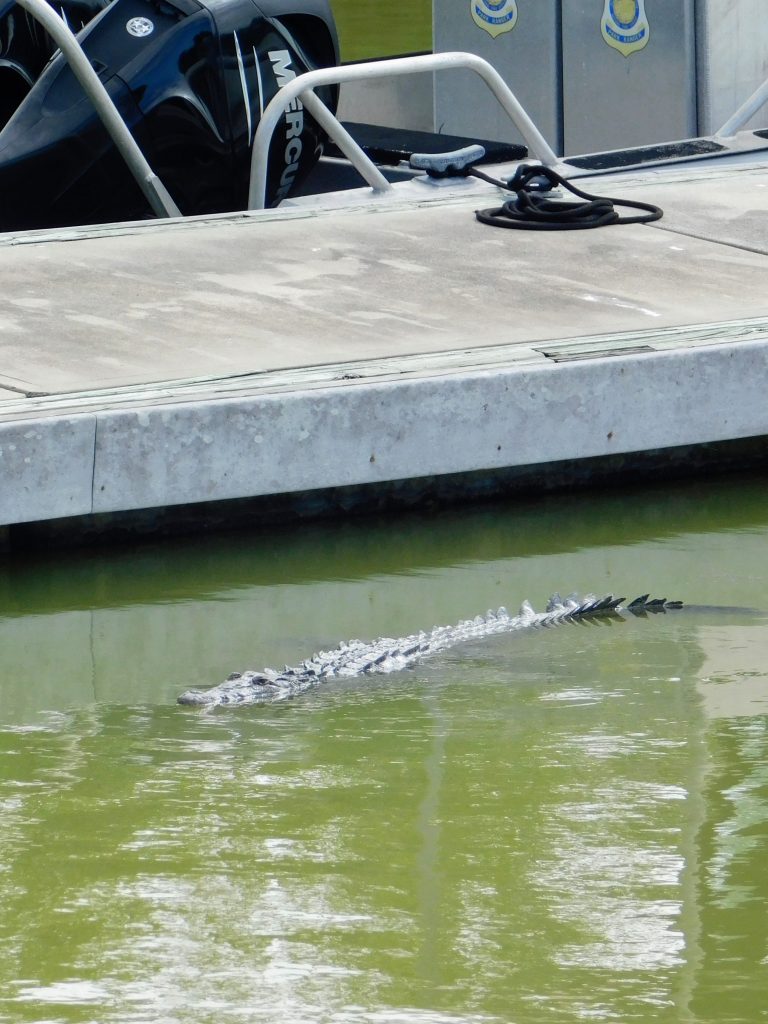
Then there was a crocodile in the harbor.
Not at a distance. Right there. Reminding us of our crocodile tour in Costa Rica.
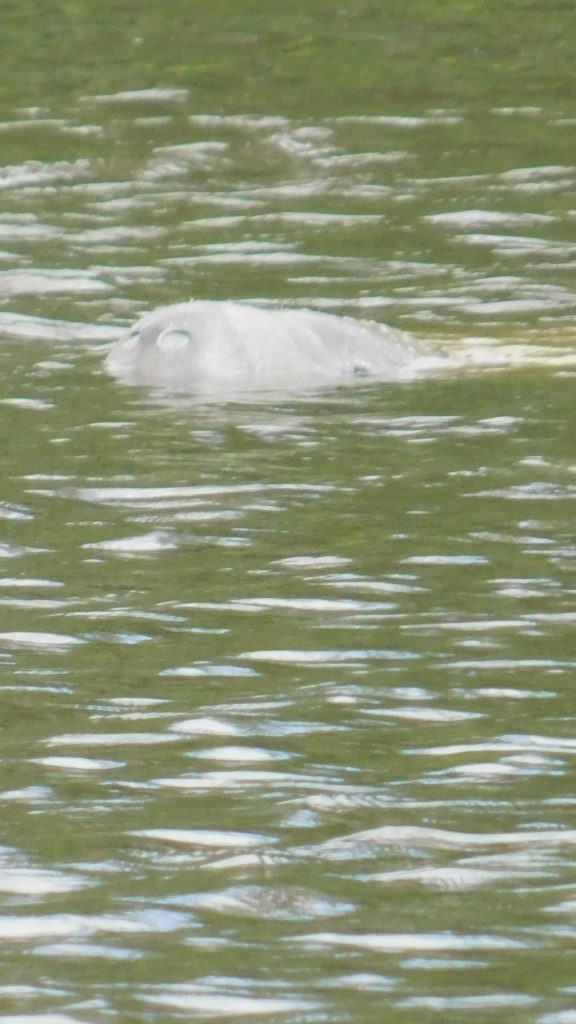
As if that weren’t enough, two manatees surfaced nearby. I had never seen them in the wild before. While they didn’t stay up long enough for great photos, the moment was still special.
Once we realized boat tours were available, the decision was easy. Carpe diem!
Flamingo Boat Tour: Birding on Florida Bay
The marina offers two tours: one into the mangrove estuary and one out into Florida Bay. Since the Florida Bay tour departed first, that’s the one we chose.
Almost immediately, we started spotting birds.
Brown Pelicans and more
Brown pelicans were among the first birds we saw, and we continued seeing them throughout the day. They may be common, but they are always entertaining to watch.
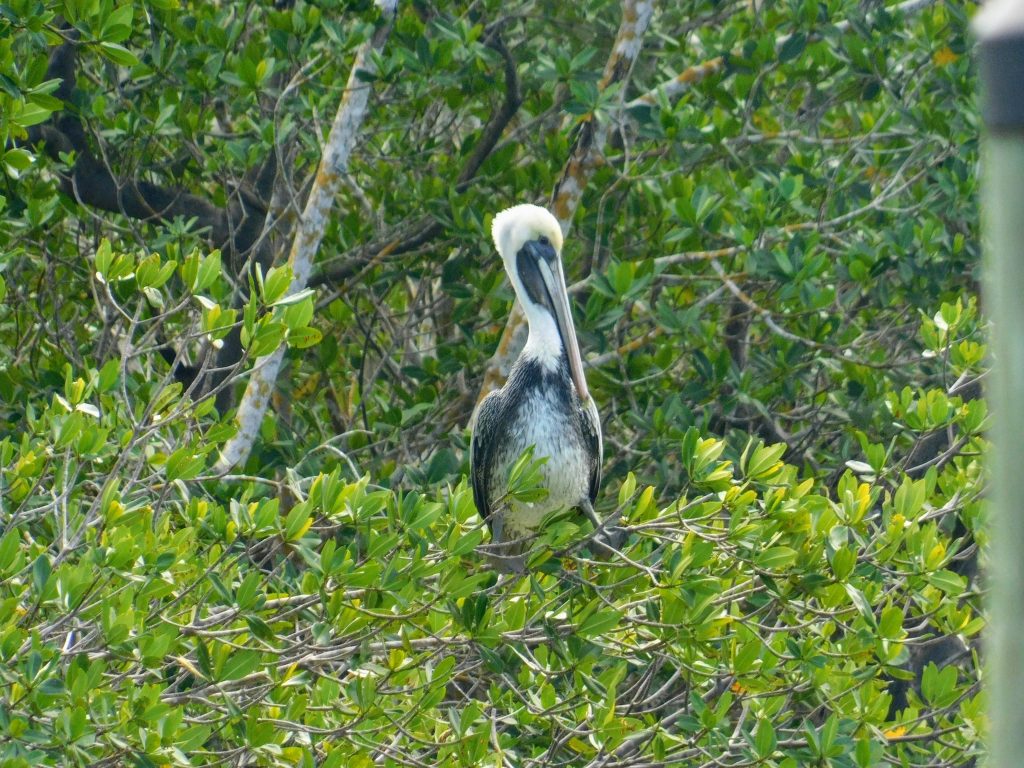
A wonderful bird is the pelican,
His bill will hold more than his belican.
He can take in his beak,
Food enough for a week,
But I’m damned if I see how the helican.
— Dixon Lanier Merritt (1910)
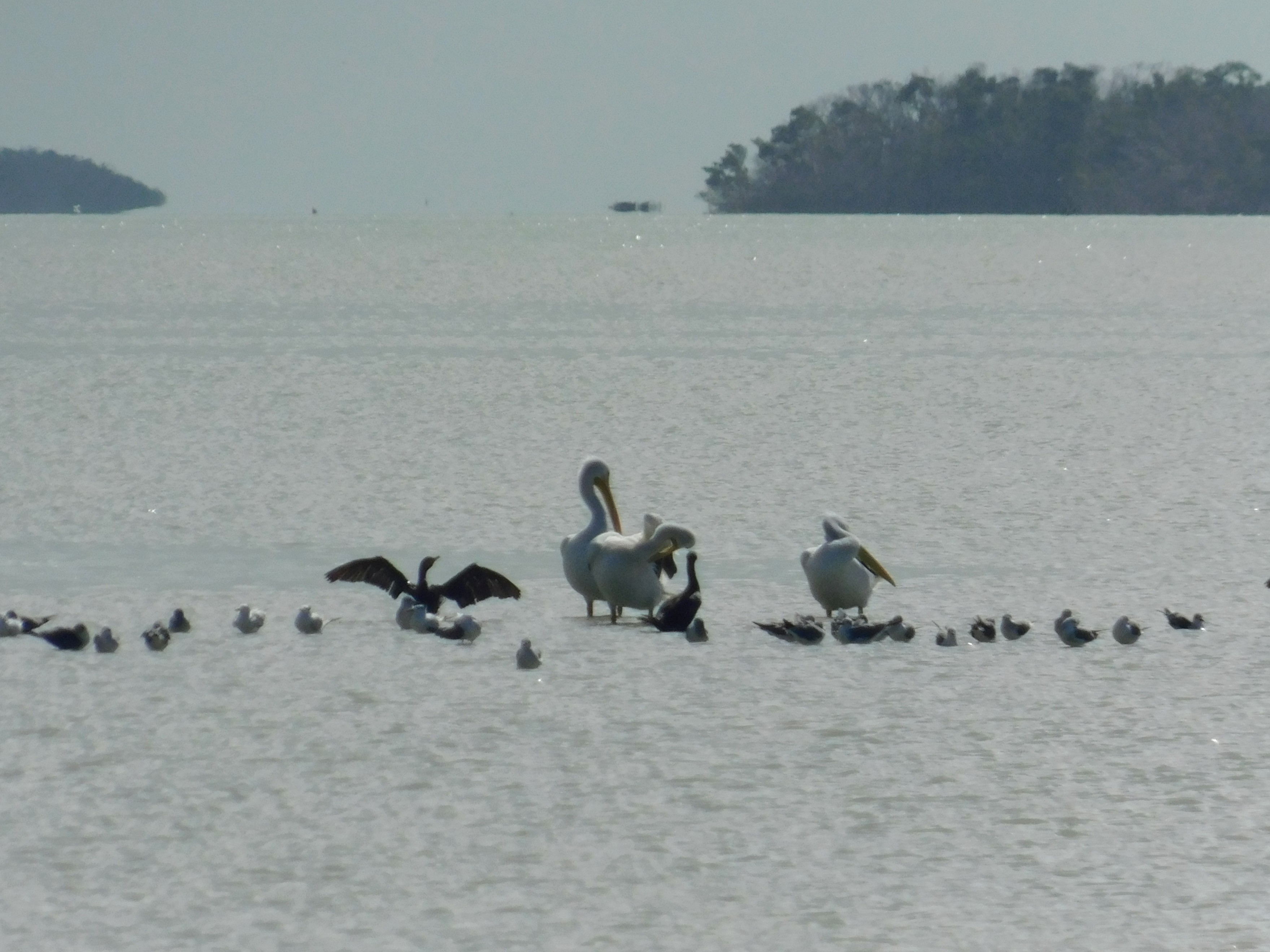
As we left the marina, we also saw more white pelicans, cormorants, and gulls. Seeing white pelicans next to cormorants really drives home just how massive they are.
Blue Heron White Morph
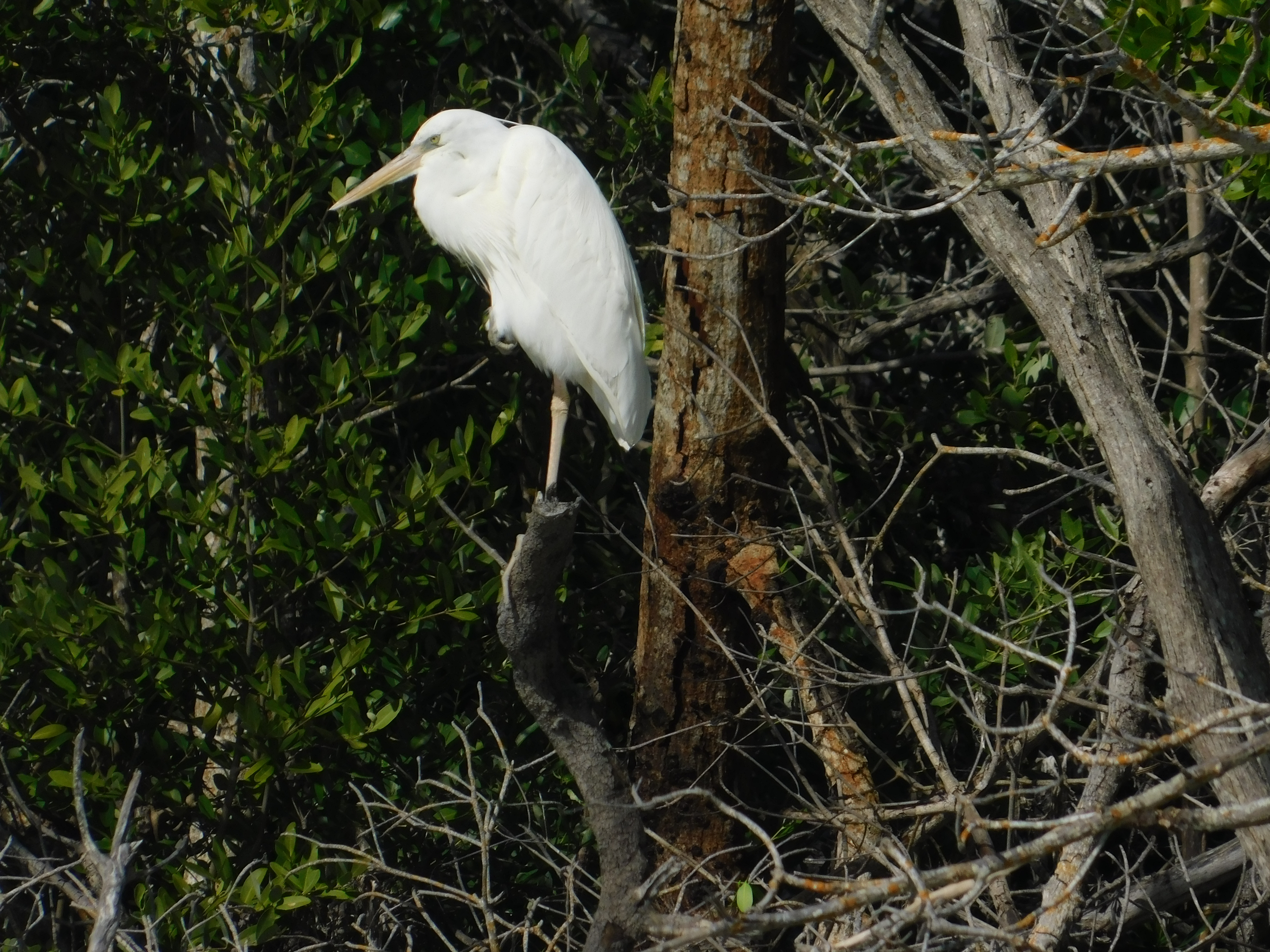
One of the more interesting learning moments came when our guide pointed out a white bird I had assumed was a great egret.It turned out to be a great blue heron in its white morph. Who would have thunk a blue heron could be white?!?
The key difference is leg color: great egrets have black legs, while white morph great blue herons have grayish legs. A new tidbit of birding knowledge!
Dolphins and the Ride Back
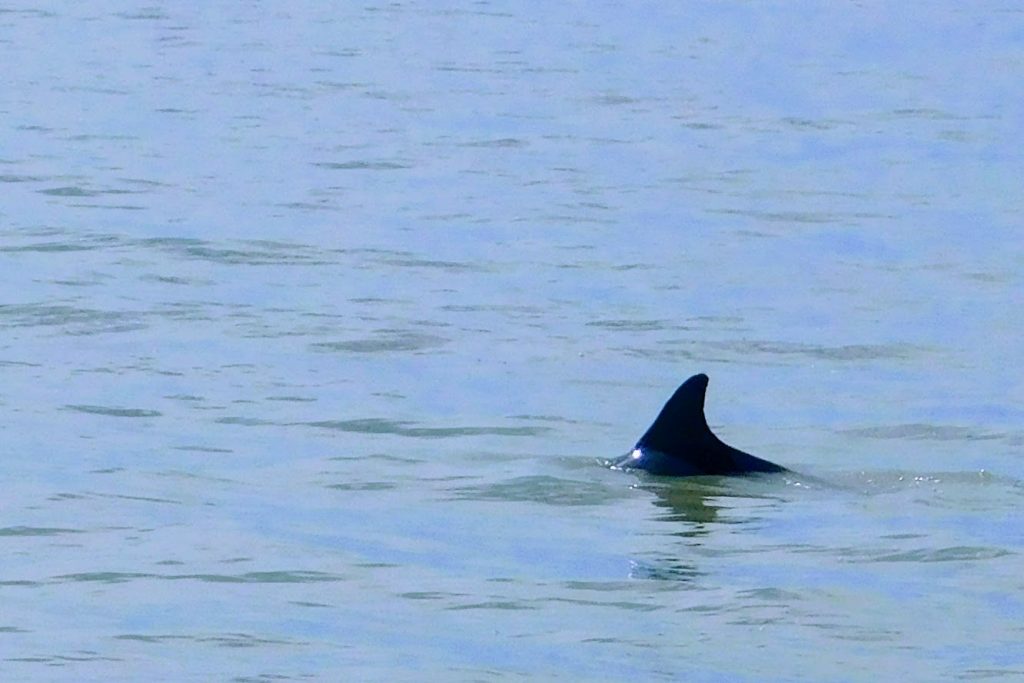
As if the day wasn’t already full enough, a pod of dolphins appeared and spent some time surfacing around the boat.
I never get tired of seeing dolphins, whether it’s here or in places like Sian Ka’an. Or in the Pacific, dolphin watching in Hawai’i.
On the ride back, we saw more herons and ospreys. Mostly we just enjoyed being on the water, far away from New Hampshire snow. Simple pleasures For The Win!
Mrazek Pond
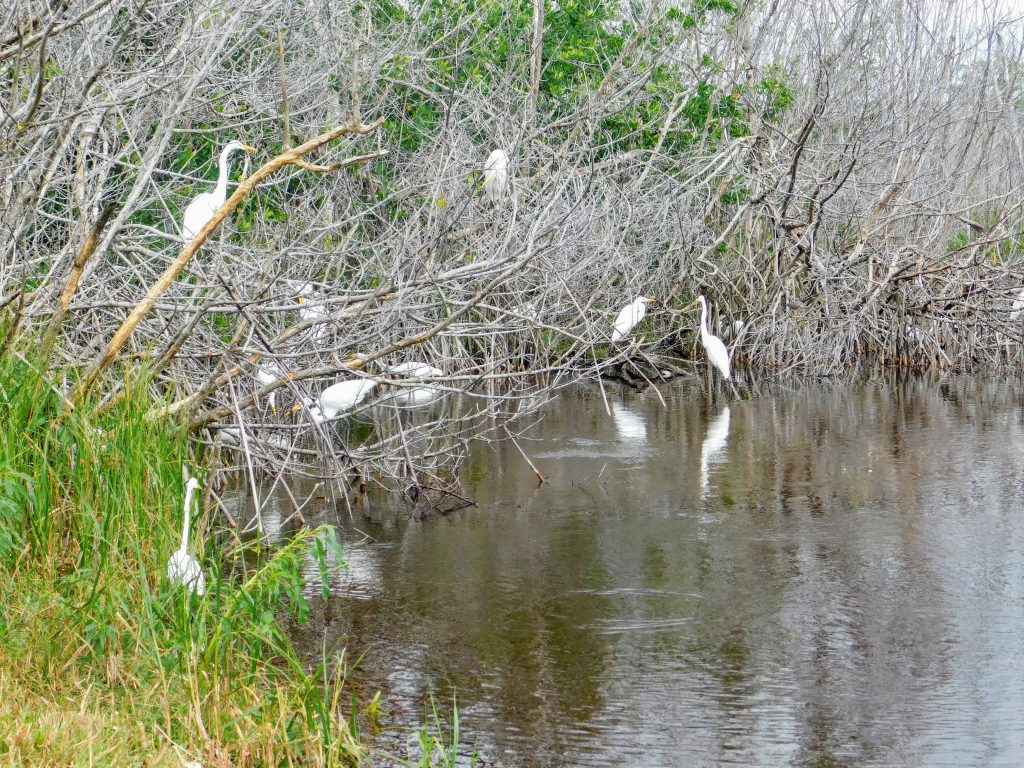
Heading back into the park, we were driving along when we noticed a pull-off at Mrazek Pond packed with cars and people pointing cameras in all directions. That is usually a good sign. So we pulled over too.
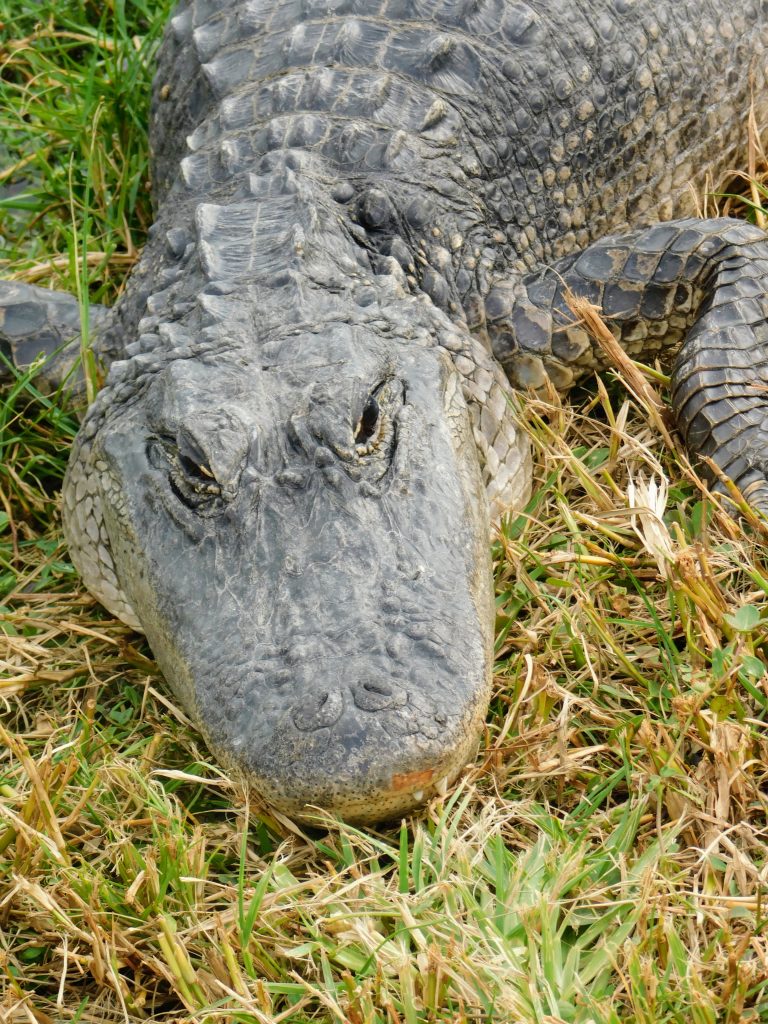
There were birds everywhere. In the trees, on the water, flitting about just enough to keep binoculars glued to our faces. Fully absorbed in birding, we completely ignored what was happening at our feet. Until someone nearby said, very calmly: “Don’t miss the alligator.”
As in the alligator lying right in front of us, patiently waiting for foolish birders to wander a little too close.
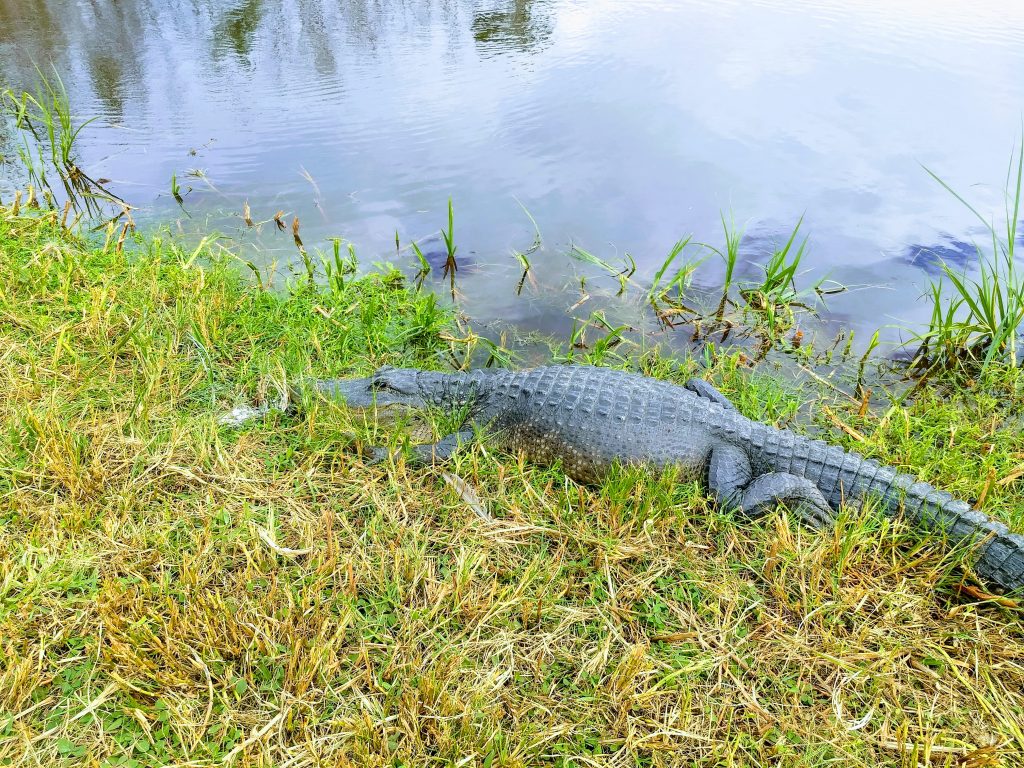
Later, when I told this story to a friend who grew up in Florida, he waved it off. “Oh, if you bumped into him, he would’ve just gotten up and moved away.” I have absolutely no desire to ever test that theory.
Which Birds can you see at Mrazek Pond?
Before anything else, a brief Public Service Announcement for birders in the Everglades:
Look for alligators before you look for birds.
Once we did that, we could safely enjoy what Mrazek Pond had to offer. And it had plenty.
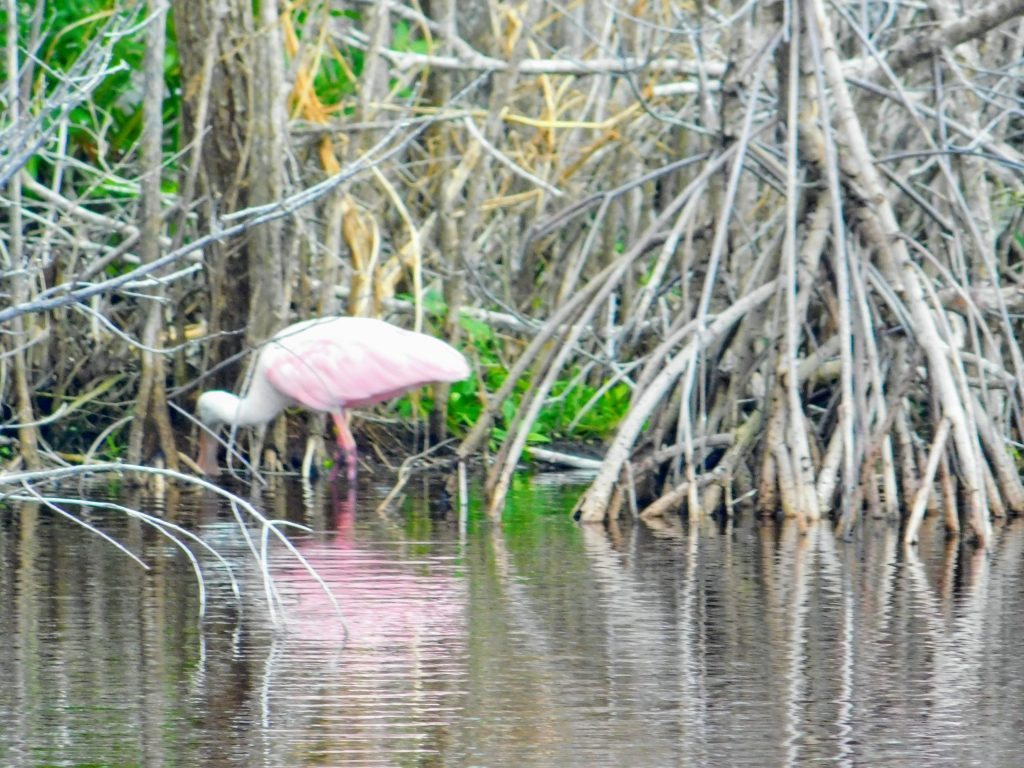
Roseate Spoonbills
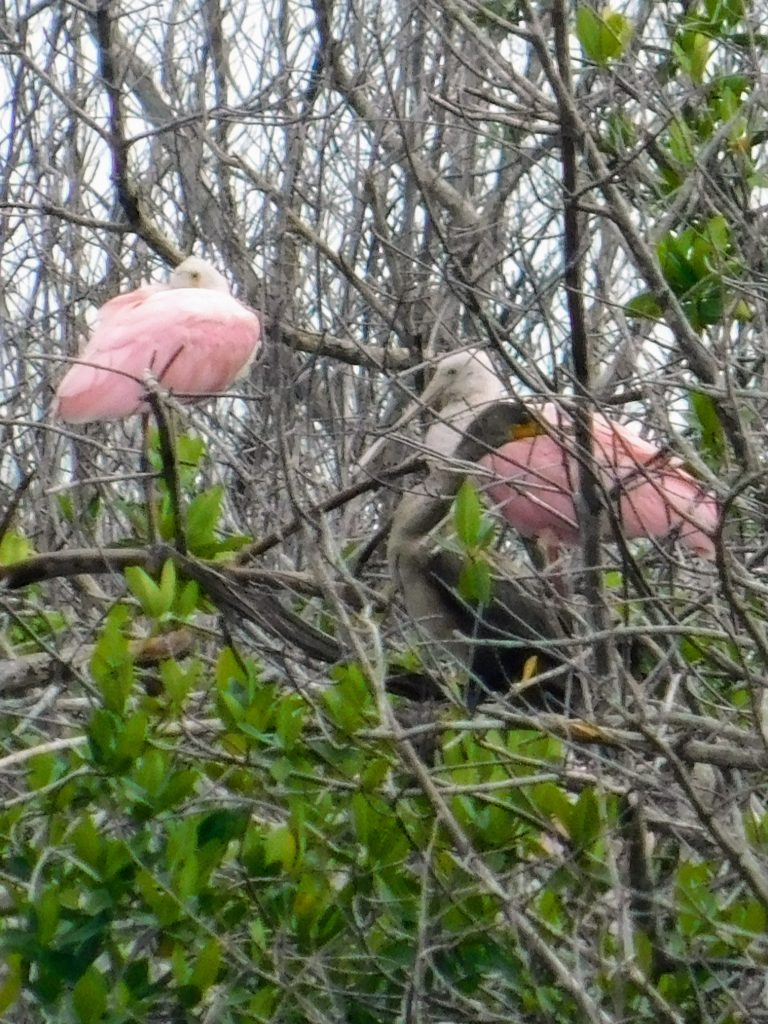
We were thrilled to see roseate spoonbills here. These birds are pure flamboyance, all pink feathers and improbable bills. When planning our Everglades birding trip, I had secretly hoped to see flamingos. Since that did not happen, the spoonbills turned out to be an ok substitute.
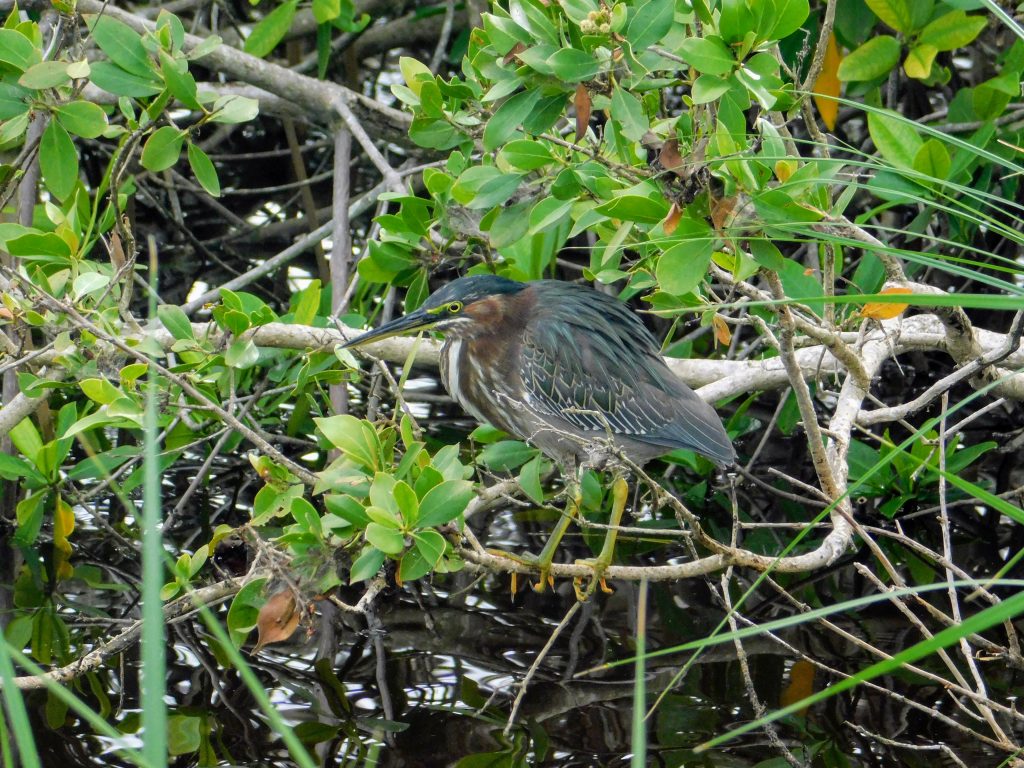
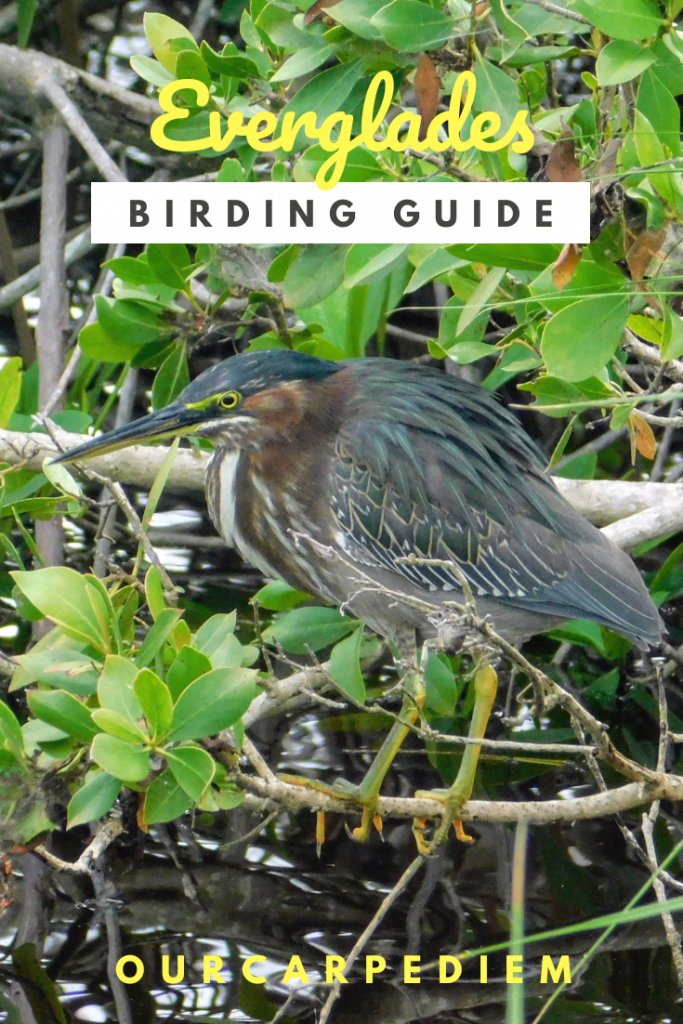
Green heron
Amid all the white and pink birds, we spotted a smaller, darker heron tucked in closer to the vegetation. With a little help from the Merlin app, we identified it as a green heron.
Mrazek Pond turned out to be one of those classic Everglades stops: rich in birds, and featuring at least one reptile ready to remind you where you are.
And yes, we watched our step very carefully on the way back to the car.
Accessibility at Mrazek Pond
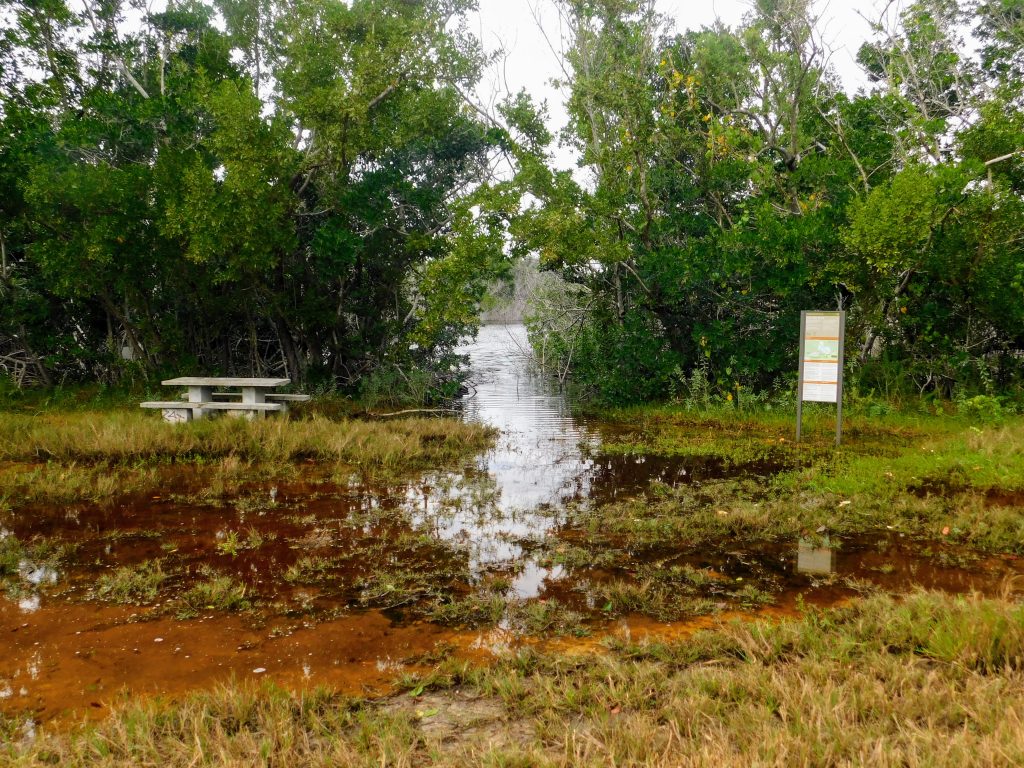
Mrazek Pond does not have a formal trail or boardwalk. The pond sits directly beside the road, with a grassy strip between the pavement and the water. Because of this, it is technically accessible, but not in a paved or structured way.
If you use a wheelchair or prefer to avoid uneven ground, it is perfectly possible to bird from the car or remain on the road shoulder. Many of the birds are easily visible from there, and a telephoto lens or binoculars will bring them close without needing to step onto the grass. No walking is required unless you choose to move closer to the water.
Given the presence of alligators and the uneven terrain, staying on the road is not just easier, it is also the safest option.
Paurotis Pond
Another worthwhile stop is Paurotis Pond. It is refreshingly simple: a parking lot and a pond. No trail, no hiking required, just pull over and start looking. Sometimes that is exactly what tired birders need at the end of a long day.
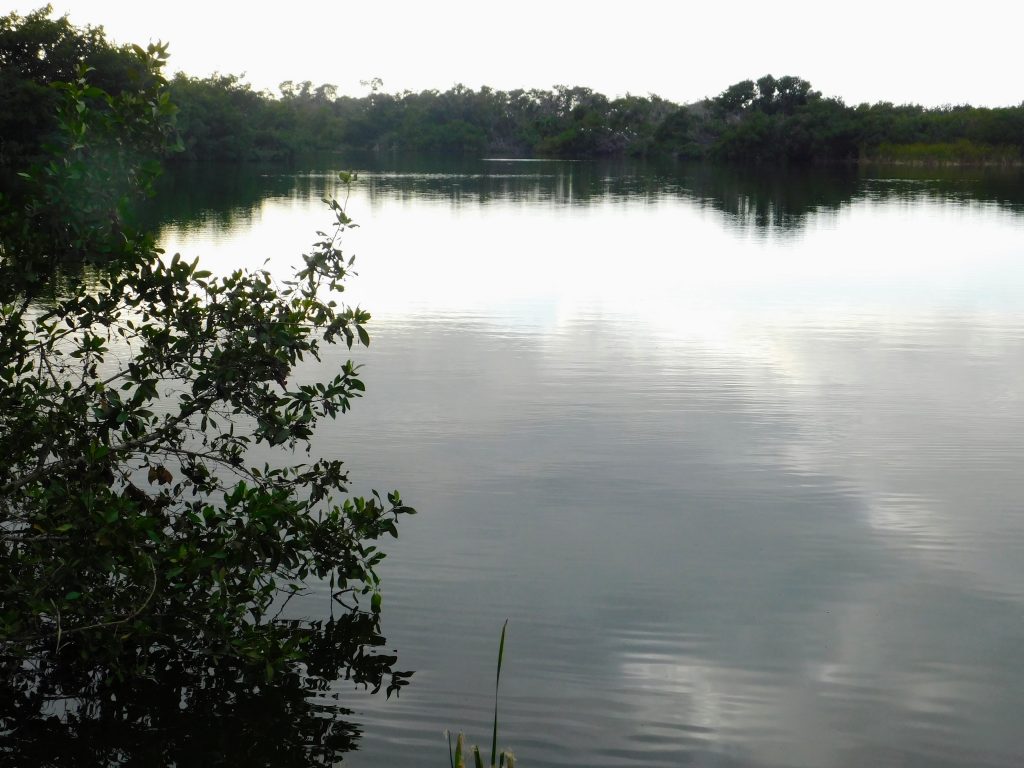
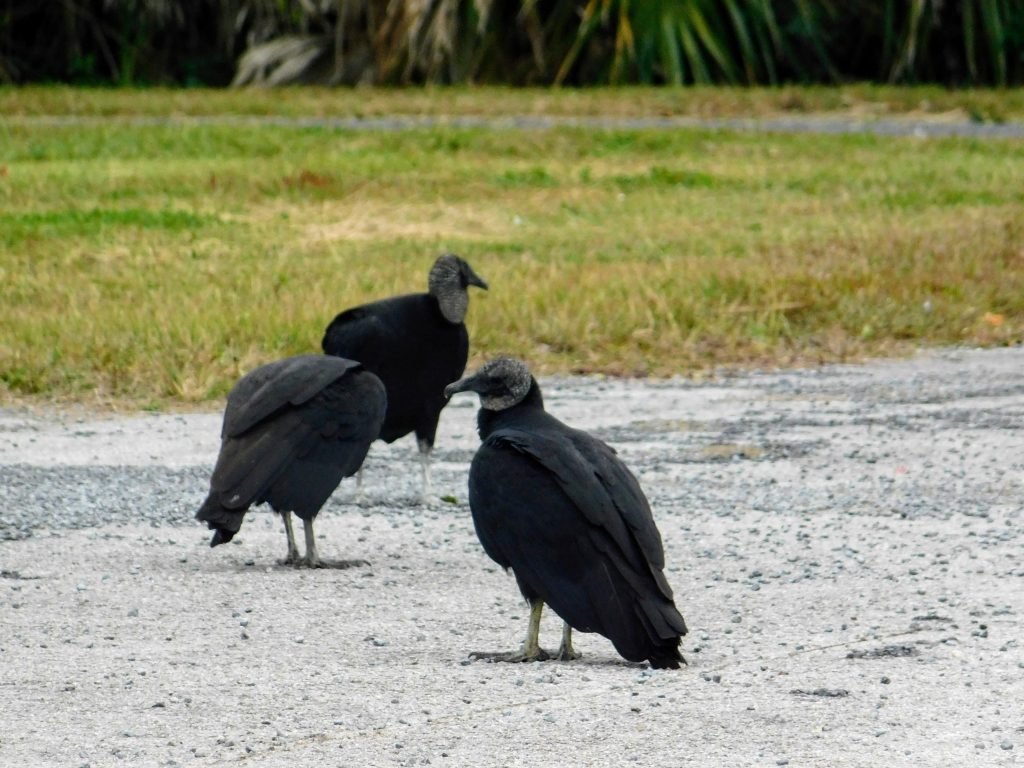
Black Vultures
To our surprise, Paurotis Pond was where we finally got a good look at black vultures. They were casually hanging out right in the parking lot, completely unfazed by people coming and going. Were they waiting for people to get run over? Anyway, I had never been this close to vultures before.
In fact, this may have been the first time I could confidently identify a black vulture in the field. Usually, they are soaring too high overhead to clearly see the head color that distinguishes them from turkey vultures. Here, there was no doubt.
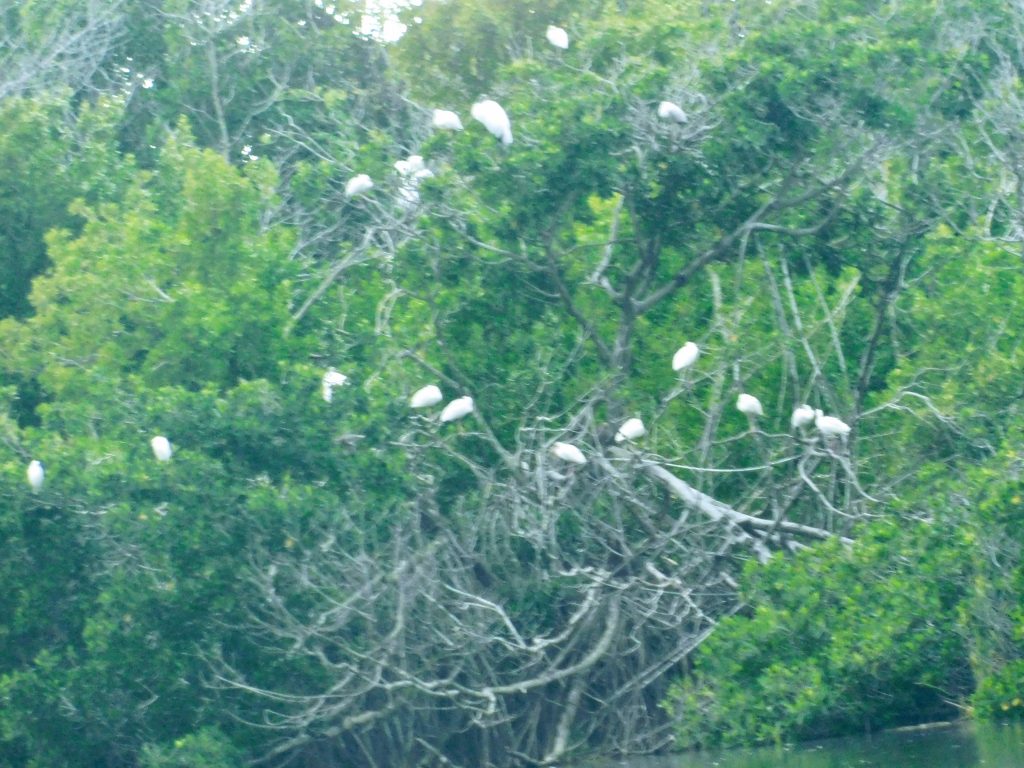
Roseate Spoonbills
As a bonus, there is a roseate spoonbill colony across the water. They were a bit far away for detailed photos, but it was still a pleasure to watch them flying back and forth.
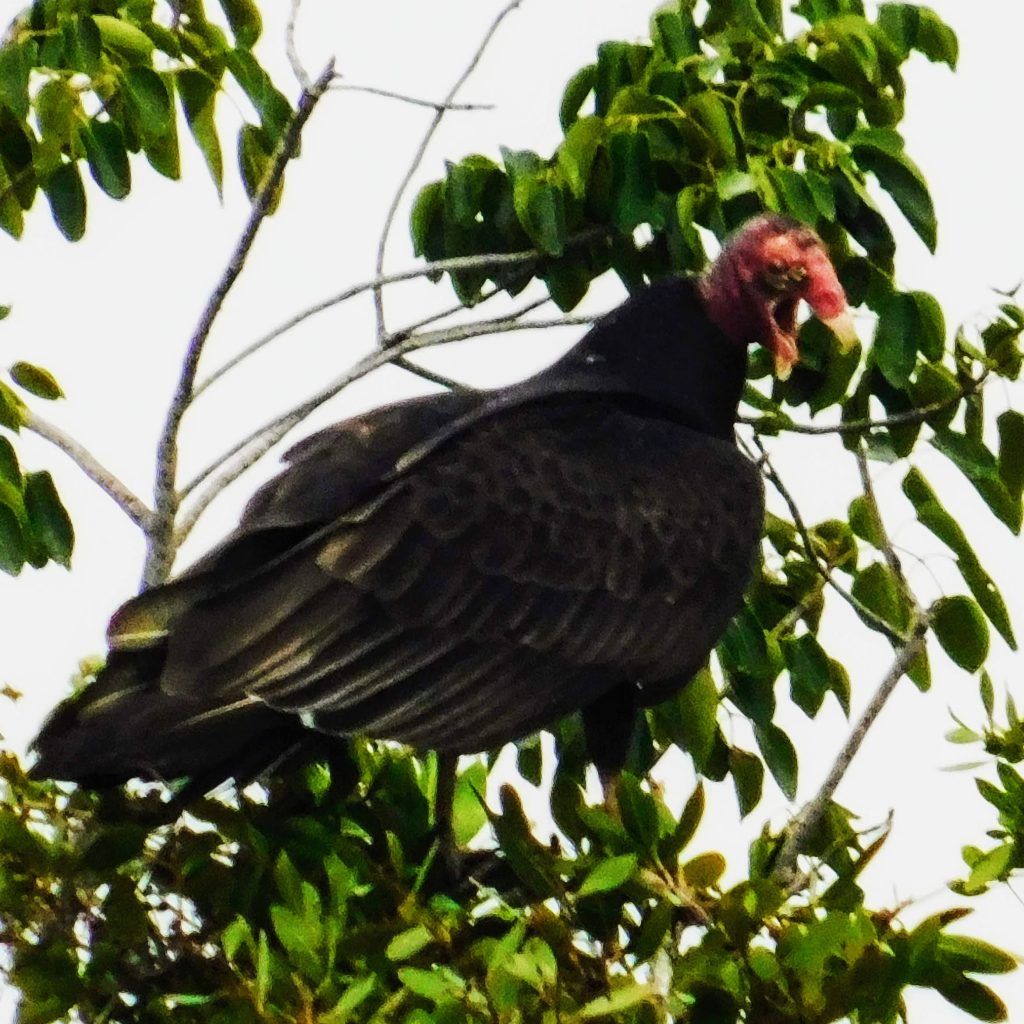
Turkey Vultures
It was a lot easier to get a picture of the turkey vulture in a nearby tree. Super cool to see both black vultures and turkey vultures so up close. Notice the red head color on the turkey vulture.
Accessibility at Paurotis Pond
Paurotis Pond is very easy to bird without leaving your car. If you prefer, you can stay in the parking area and still see vultures and spoonbills across the water, making this a good stop for wheelchair users or anyone recovering from an injury.
Conclusion: Birding in The Everglades
The Everglades are full of birds, even if you don’t want—or can’t manage—to hike far or get up at dawn. Some trails are wheelchair accessible, and spots like Mrazek and Paurotis Ponds let you enjoy incredible birds with minimal walking.
This isn’t an exhaustive guide to every trail or every species, but it should give you a good sense of the park’s natural richness—and its surprising accessibility. Go see for yourself, but remember: look down as well as up to the sky. Crocodiles and alligators are part of the show!
Have you visited the Everglades? Seen a flamingo—or a sneaky alligator? Which trail or pond was your favorite? Share your experiences and sightings!
Frequently Asked Questions: Everglades Birding
Planning a trip to the Everglades? Here are some common questions to help you make the most of your birding adventure—especially if it’s your first visit or you have limited mobility.
Is birding in the Everglades suitable for beginners?
Absolutely! Trails like the Anhinga Trail and stops like Mrazek and Paurotis Ponds make it easy to see a wide variety of birds without advanced skills. Binoculars and a camera enhance the experience, but curiosity is the only real requirement.
Can I bird the Everglades with limited mobility or in a wheelchair?
Yes! Several trails are wheelchair accessible, including the Anhinga Trail and Gumbo Limbo Trail. Ponds like Mrazek and Paurotis are visible from the roadside or parking areas, so you can enjoy birds without leaving your car.
What birds are easiest to see in the Everglades?
Some of the most visible and photogenic birds include:
- Roseate spoonbills – bright pink and flamboyant
- Great egrets and herons – elegant wading birds
- Anhingas and cormorants – drying wings on boardwalks
- Vultures – black and turkey vultures, often up close
Will I see alligators or crocodiles while birding?
Yes. They’re part of the Everglades wildlife and are often near the water or boardwalks. Always watch your step and keep a safe distance—especially when photographing birds near the water.
Are there guided tours or boat trips for birding?
Yes! The Flamingo Visitor Center offers boat tours into Florida Bay or the mangrove estuary. These tours provide a chance to see ospreys, dolphins, brown pelicans, and other wildlife with minimal walking.
When is the best time to visit for birding?
Birding is great year-round, but winter months are especially rewarding for wading birds and migratory species. Early mornings or late afternoons often provide the best light and more active birds.
Other UNESCO World Heritage Sites To Visit
World Heritage Sites in the Americas
- Sian Ka’an Biosphere in Mexico: where the sun was born;
- The Everglades: both a UNESCO World Heritage Site and a Biosphere Reserve;
- The Statue of Liberty in New York City, USA;
- Take an Alaska cruise and visit Glacier Bay National Park;
- Go watch whales in Quebec City;
- Puerto Rico Does it Better! Old San Juan and fun facts about Puerto Rico
World Heritage Sites in Europe
- Paris around the Seine;
- Waldorf Astoria Amsterdam: right in the middle of the historic Canals District;
- Passau, Germany, often the start or end of a Danube river cruise;
- Matera, Italy: the oldest continually habituated place in the world, also called the City of Caves;
Birding Around The World
- Never Smile at a Crocodile! Beginner’s guide to Birding in the Everglades;
- Birds, Dolphins and Fish Poop: Discover Sian Ka’an, a UNESCO World Heritage Site;
- Eagles galore!
- Invasive Alien Birds in Hawai’i: don’t get fooled by their beauty;
- Life time bucket list: follow Thousands of Snow Geese;
- Watch a heron take out a crocodile!
- The best birding in Costa Rica;
- Explore Isla Contoy in Calcun;
- When hiking is too hard: birds on the Manoa Falls Trail;
- Kennebunkport Maine has good birding hotspots;
- Famous bird painting for booklovers: Where is The Goldfinch Painting now? and how it doesn’t even LOOK like a goldfinch;
- Lots of incidental birding on an Alaska Cruise;
- Some people go to Las Vegas to gamble, others go to Las Vegas to go birding!
- Last but not least: why birding is the best way to socially distance;
Pin Everglades Birding Guide
Pin this article for later reference and to share with your friends.

Comments
30 responses to “Everglades Birding Guide: Best Trails, Iconic Birds & Accessible Wildlife Spots”
While most may think just alligators in regards to Everglades, myself included, this was a superb job of highlighting all of the great birds that can be sighted here. Would love to visit.
Thank you, Andrew. I was the same as you, had no idea what to expect apart from those alligators. Hope you will get to visit some day!
Thanks for stopping by and commenting.
Thanks for this great bird – and Alligator show!! Very nice to see so many! By the way we have Green herons right here in VT/NH.I’ve seen them while out kayaking!!
Very welcome! Cool @ seeing green herons around here. Tom says it makes sense, since it is the green mountain state 😀 😀
Thanks for stopping by and commenting!
I LOVE this post and all your photos! I live in NE Florida in St. Augustine. I take bird photos a lot and love to share them. It’s amazinf how many birds we see in Fl. I definitely plan to pin this post because someday I want to come down to south Florida for vacation and explore. Thanks so much!
Thank you! Looks like you have your share of amazing nature in your neck of the woods too. Hope you will get to visit the Everglades and see tons of birds and other wildlife.
Thanks for stopping by and commenting!
I had no idea you could see so many different birds at the Everglades! Are the pictures yours? They look amazing!
Thank you, Carla. Yup, the pictures are all mine or my husband’s, that’s why the manatee and dolphin pictures are not National Geographic level, but just an illustration of what we could see right there 🙂
Thanks for stopping by and commenting!
[…] loudly, three Canada geese fly past. A red squirrel checks us out. Still, nothing happens. Unlike watching birds in the Everglades, where we almost tripped over an alligator, now that would have been […]
The Everglades are truly amazing and a favorite of mine, especially in the winter season. The Anhinga Trail and Shark Valley Observation Tower are my favorite land destinations to view birds. Great post!
We will have to check out the shark valley observation tower, we had only one day to explore which clearly isn’t enough. I wish we lived closer!
Thanks for stopping by and commenting.
Your pictures are breathtaking and will make my day. Thanks for sharing such a wonderful post.
Thank you, Marjie! I hope you will get to visit the Everglades some day and see these wonderful birds.
Thanks for stopping by and commenting.
So wonderful, once I went to ornitology course.
And these pink birds on the second picture are
so special..
Thank you! Yes, these pink birds are amazingly beautiful.
Thanks for stopping by and commenting!
Love the wildlife pics you’ve captured – this is definitely on my bucket list. It’s not too far from me.. Thanks for sharing!
I hope you get to visit some day ! It is such an amazing place.
Thanks for stopping by and commenting
[…] you might have noticed, I love birding, so I am always excited to see new birds. Heck, I am excited about seeing any birds, even if I have seen them over and over. One of my […]
[…] place where we have seen these cool creatures was at Everglades National Park, one of our national birding […]
[…] The Everglades: We didn’t snorkel, but we did see dolphins and tons of birds. Even almost tripped over an alligator! […]
[…] 2021 Update: after a summer break, when the pandemic flattened its curve, we are back to scary and worrisome numbers. So yes, we are still birding locally, even if we’d rather be birding in the Everglades. […]
[…] Everglades & Dry Tortugas. This reserve also includes Fort Jefferson National Monument, which consists of a group of seven coral reefs called the Dry Tortugas National Park. In addition, the reserve contains some 200 known archaeological sites. Lots of historic Native American use for settlement, farming and fishing activities. […]
[…] US National Parks. […]
[…] moved to America, I always imagined National Parks would be big and imposing and mostly imagined The Everglades, Glacier Bay and Yosemite. But it turns out there are many more NPS sites, not only the big ones. […]
[…] one of the best ways to socially distance. Consider exploring Costa Rica or stay within the USA by birding in the Everglades or […]
[…] The Everglades: both an UNESCO World Heritage Site and a Biosphere Reserve; […]
[…] go Watch Whales in Quebec City or Birding in the Everglades. Heck, you could even Bungee Jump off the Space […]
[…] The Everglades: both an UNESCO World Heritage Site and a Biosphere Reserve; […]
[…] we even started traveling farther away again. Just returned from a trip to Florida and planning to visit my family in The Netherlands this upcoming […]
[…] Never Smile at a Crocodile! Beginner’s guide to Birding in the Everglades; […]